Courses and Events
Not every introduction to everyday mysticism has to begin with a retreat. Some of its most important lessons can also be learned in a different way. Although nothing beats practice when it comes to the contemplative life, the absorption of knowledge, learning from tradition, and finding creative ways to make inherited wisdom one's own have always been a part of the mystical tradition.
The offerings on this page are not merely an introduction to what everyday mysticism is about and the tradition on which it is built, but are also excellent ways to deepen one's existing practice and provide it with a solid historical footing.
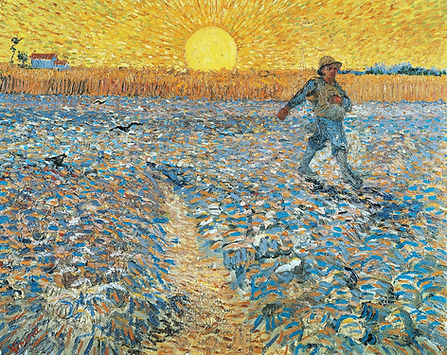
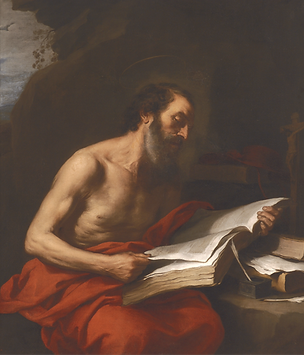
The Sundays With . . . sessions focus on a single artist, writer, or poet whose life and work enters the mystical tradition from a different direction. In four workshops, we will explore what lessons about the contemplative life can be drawn from art and literature. Although these sessions include a historical and theoretical component to sharpen the senses, their aim is largely to bridge the gap between the contemplative and the artistic life through creative assignments that deepen not merely one's understanding, but also one's capacity for seeing and responding to the world.
Each of the courses takes a more theoretical approach toward the contemplative life. The aim is to trace the Western mystical tradition — Judaic, Christian, Islamic — in its various dimensions. These courses are specifically designed for anyone with a general interest in mysticism and spirituality, or practitioners who wish to bring understanding to their daily practice. Although the courses are more theoretical in orientation, they remain close to what the tradition itself has always insisted: mysticism is not the pursuit of peak experiences, but a way of living.
The free course A Primer to Everyday Mysticism is particularly designed to give participants a concise introduction to the Western mystical tradition and its relevance to contemporary life: who its key figures are, what currents run through it, and what it actually means — in practice, in daily life — to inhabit the world contemplatively rather than merely pass through it.
Where an ordinary book club reads to cover ground, lectio divina reads to open it. In these gatherings, participants are introduced to the medieval practice of contemplative reading in which a text is approached as the occasion for deep spiritual reflection. We will concentrate on relatively short passages drawn from literature and poetry, in which the text is not treated as the answer, but as a question. Reading as a devotional practice, built on the belief that a text — like any work of art — only begins to speak when we stop moving.